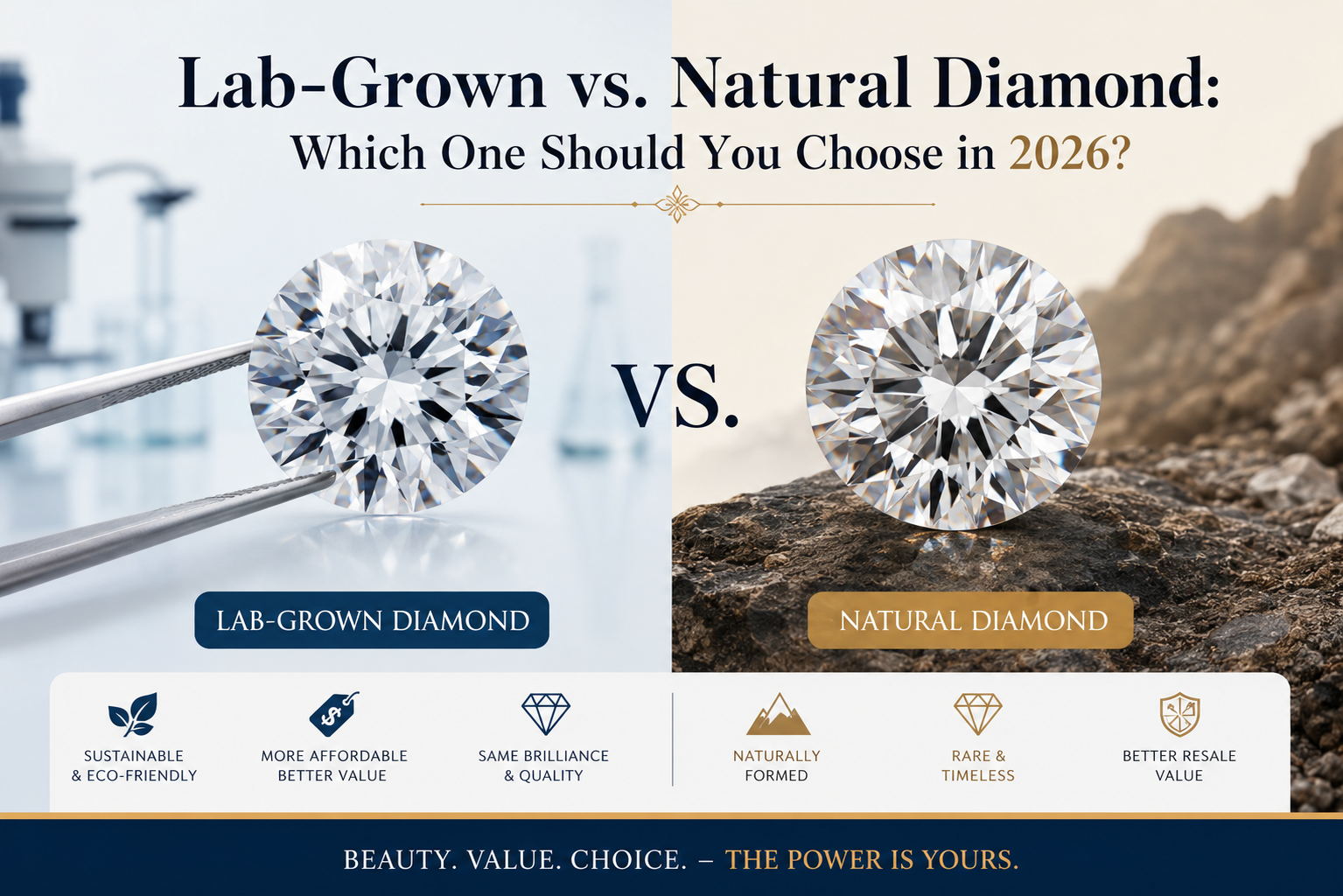
Lab-Grown vs. Natural Diamond: Which One Should You Choose in 2026?
Diamonds have long symbolized love, commitment, and luxury. However, today’s buyers have more choices than ever before. One of the biggest decisions modern shoppers face is choosing between a Lab-Grown vs. natural diamond. While both options offer exceptional beauty and brilliance, they differ in origin, value, sustainability, and price.
If you are planning to buy a diamond engagement ring, wedding jewelry, or a special gift in 2026, it is a good idea to know about the differences between lab-grown diamonds and natural diamonds. This will help you pick a diamond engagement ring or wedding jewelry that fits your needs and budget.
In this guide, we will look at lab-grown diamonds and natural diamonds. We will compare the quality of lab-grown diamonds and natural diamonds, the durability of lab-grown diamonds and natural diamonds,s the cost of lab-grown diamonds and natural diamonds, the resale value of lab-grown diamonds and natural diamonds, the environmental impact of lab-grown diamonds and natural diamonds, and other things about lab-grown diamonds and natural diamonds.
What Is the Difference Between Lab-Grown and Natural Diamonds?
The most significant difference between a Lab-Grown vs. Natural Diamond is how they are created.
Natural Diamonds are made deep down in the Earth. It takes a lot of pressure and heat over a long time, billions of years, for them to form. People dig them up from the earth. Then they are cut and polished to make pretty jewelry.
Lab-Grown Diamonds, which are also called Lab-Created Diamonds, are made in labs using advanced technology such as:
-
Chemical Vapor Deposition (CVD)
-
High Pressure High Temperature (HPHT)
These methods copy how diamonds grow naturally. These results are in diamonds that have the chemical, physical, and optical properties of diamonds found in mines.
Key Differences at a Glance
| Feature | Lab-Grown Diamond | Natural Diamond |
|---|---|---|
| Origin | Laboratory-created | Earth-mined |
| Appearance | Identical | Identical |
| Hardness | 10 Mohs | 10 Mohs |
| Certification | Available | Available |
| Price | Lower | Higher |
| Resale Value | Lower | Better |
| Sustainability | More eco-friendly | Mining impact |
Are Lab-Grown Diamonds Real?
One common question buyers have is whether lab-grown diamonds are real. The answer is yes. Lab-created diamonds are not fake. They are not zirconia or moissanite. Lab-created diamonds have the same qualities as real diamonds.
-
Carbon crystal structure
-
Hardness
-
Fire and brilliance
-
Durability
Even professional gemologists often require specialized equipment to distinguish a lab-grown diamond from a natural one.
Also Read
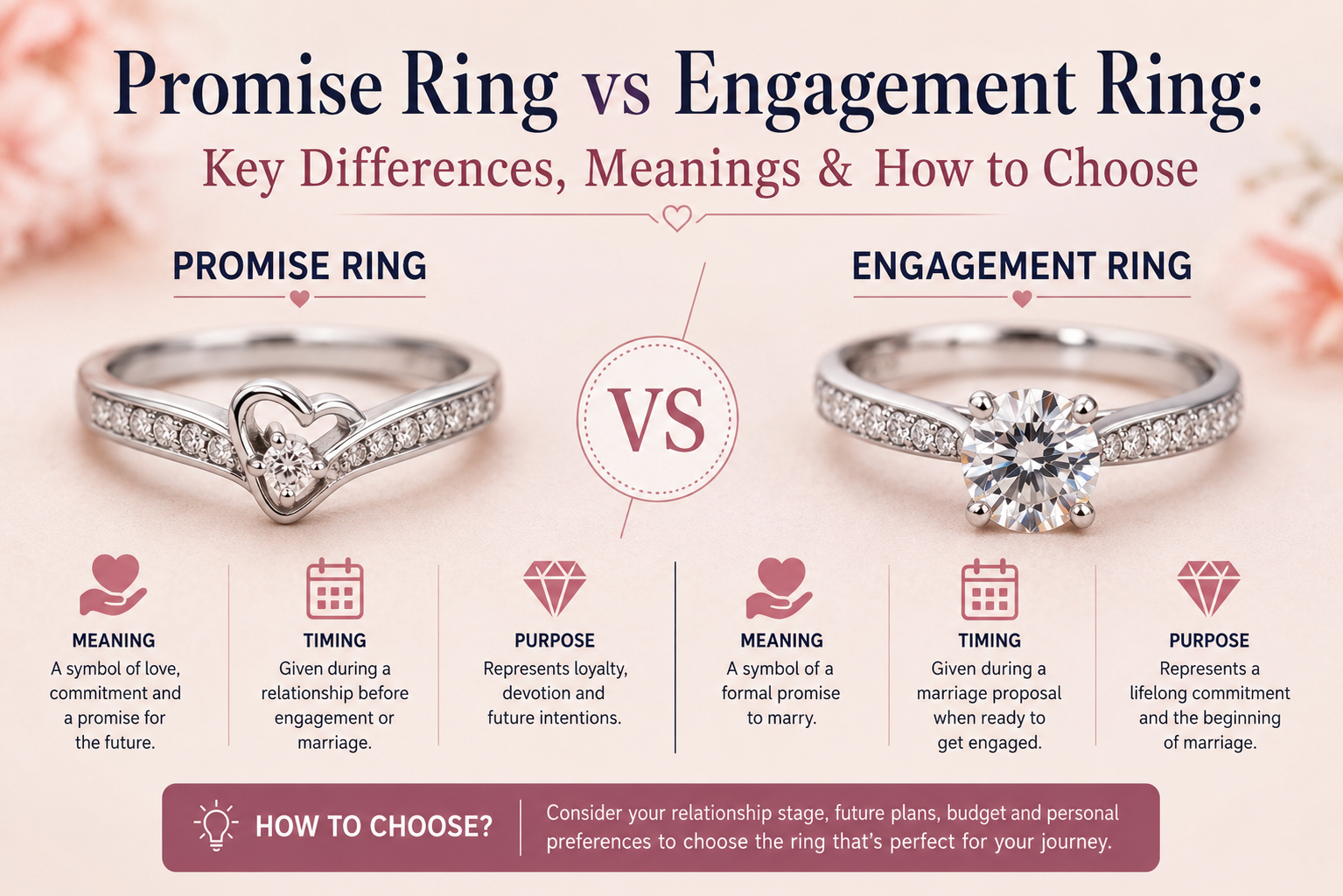
Promise Ring vs Engagement Ring: Key Differences, Meanings & How to Choose
Lab-Grown vs. Natural Diamond Quality
When comparing Lab-Grown vs. Natural Diamond Quality, there is virtually no visible difference.
Both are graded using the famous 4Cs:
1. Cut
The cut determines how brilliantly a diamond reflects light.
2. Color
Diamonds are graded from D (colorless) to Z (light yellow).
3. Clarity
Measures internal and external imperfections.
4. Carat Weight
Refers to the size and weight of the diamond.
Because lab-grown diamonds are produced in controlled environments, they often exhibit fewer inclusions and better color grades for the same price point.
Winner: Lab-Grown Diamond
You typically receive higher-quality specifications for less money.
Lab-Grown vs. Natural Diamond Durability
Another common concern is longevity.
Both natural and lab-created diamonds score:
10 on the Mohs Hardness Scale
This means they are:
-
Scratch-resistant
-
Suitable for everyday wear
-
Ideal for engagement rings
-
Extremely durable
Do Lab-Grown Diamonds Last Forever?
Yes.
A lab-grown diamond will last forever like a natural diamond. The lab-grown diamond will stay the same; it will not. Get cloudy. The lab-grown diamond will keep its sparkle. Shine over time.
Winner: Tie
Both offer exceptional durability.
Lab-Grown Diamond Cost: Why Are They Cheaper?
Price is often the deciding factor for many buyers.
Lab-Grown Diamond Cost
Lab-grown diamonds generally cost:
-
30% to 70% less than natural diamonds
-
Larger carat sizes for the same budget
-
Better quality grades at lower prices
For example:
|
Diamond Type |
1-Carat Diamond |
|
Natural Diamond |
$4,500 – $8,000+ |
|
Lab-Grown Diamond |
$1,000 – $3,000 |
The lower price of something is not because it is of lower quality. The lower price is because the laboratory where it is made can make it more quickly and easily. This means they do not have to do mining operations to get the things they need to make it. The laboratory production is a better way to make things, and it costs less money.
Lab Grown Diamond Price Comparison
Let's look at a practical example.
Budget: $3,000
Natural Diamond Option
-
Around 0.70–0.90 Carat
-
Lower clarity or color grade
Lab-Grown Diamond Option
-
Around 1.50–2.00 Carat
-
Higher clarity and color
The price of lab-grown diamonds is really low. That is one of the biggest lab-grown diamond benefits.
Lab-Grown Diamond Benefits
Many modern buyers are choosing lab-created diamonds for several reasons.
1. Better Value for Money
You can get diamonds without spending more money. This is a way to get the diamond you want, which is a larger diamond,d, and still have the same budget for the larger diamond.
2. Excellent Quality
You can get a color and clarity for your diamond at the same price. The diamond has a color grade and a higher clarity grade, which is really great because it does not cost more. You get color and clarity grades for the same cost.
3. Eco-Friendly Diamonds
Lab-grown diamonds are really good because they do not need a lot of land to be moved around. This is a difference from the usual way that diamonds are found, which is by digging big holes in the ground. Lab-grown diamonds are a choice because they require less land disruption.
4. Conflict-Free Origin
These things get rid of worries about mining companies doing things. They eliminate concerns associated with mining companies that do not behave in a way. These things are good because they eliminate concerns associated with mining practices that are not fair.
5. Modern Consumer Choice
This is perfect for people who want to buy something exciting that does not cost too much. The buyers who are looking for innovation and affordability will really like this.
Natural Diamond Benefits
Despite the growing popularity of lab-grown diamonds, natural diamonds continue to hold strong appeal.
1. Rare and Unique
Natural diamonds were formed a long time ago, billions of years ago. This is what makes natural diamonds so hard to find: they are naturally scarce. Natural diamonds are really rare because of this.
2. Traditional Symbolism
Lots of people who buy diamonds really like the fact that mined diamonds have a history and are hard to find. Mined diamonds are special because of their history and rarity. People think mined diamonds are really valuable because of these things.
3. Better Resale Value
Natural diamonds usually keep a lot of their value as time goes by. People tend to want diamonds, and that means they are worth more even after a long time. Natural diamonds are really good at holding their market value.
4. Investment Appeal
Natural diamonds are really something, and they can actually go up in value sometimes. This usually happens when the market is just right for it. Rare natural diamonds are the ones that can do this.
5. Emotional Significance
Some people like to own things that the Earth made. They prefer to have things that come from the Earth, like rocks or shells, because the Earth created them naturally. The Earth is a place, and it makes a lot of cool things. Some people like these things because they are natural and the Earth made them.
Lab-Grown Diamond Value vs. Natural Diamond Value
Understanding value requires looking beyond the purchase price.
Lab-Grown Diamond Value
-
Exceptional initial value
-
Larger diamonds for less money
-
Strong choice for personal enjoyment
Natural Diamond Value
-
Better long-term market demand
-
Higher resale potential
-
Greater rarity factor
The right choice depends on whether you want to save money or have something that will be worth more in the long run. This really comes down to whether you care about affordability or the value of owning something for a long time.
Diamond Resale Value: Which Holds More Value?
One important factor often overlooked is Diamond Resale Value.
Natural diamonds generally retain more value because:
-
Supply is naturally limited
-
Market demand remains stable
-
Collectors prefer rare stones
Lab-grown diamonds tend to depreciate faster because production continues to increase.
If resale matters:
Natural diamonds often perform better.
If beauty and affordability matter:
Lab-grown diamonds offer superior value.
Sustainable Diamond Alternatives
Many environmentally conscious buyers seek Sustainable Diamond Alternatives.
Popular options include:
-
Lab-Grown Diamonds
-
Moissanite
-
Recycled Diamonds
-
Vintage Diamond Jewelry
When you look at these options, lab-grown diamonds are usually thought of as the alternative to natural diamonds. This is because lab-grown diamonds are actually diamonds, not fake ones that just look like diamonds. Lab-grown diamonds are diamonds, so they are different from diamond simulants.
Why Are Eco-Friendly Diamonds Becoming Popular?
Consumers increasingly care about sustainability.
Benefits of Eco-Friendly Diamonds
-
Reduced environmental impact
-
Less land excavation
-
Lower water usage
-
Reduced carbon footprint compared to mining operations
Many younger buyers now prioritize sustainability alongside beauty and affordability.
Diamond Certification Guide
Whether purchasing a natural or lab-grown diamond, certification is essential.
Trusted Diamond Certification Laboratories
GIA (Gemological Institute of America)
One of the world's most respected grading authorities.
IGI (International Gemological Institute)
Widely used for both natural and lab-grown diamonds.
GCAL
Provides detailed grading and performance analysis.
What Should a Certificate Include?
-
Cut Grade
-
Color Grade
-
Clarity Grade
-
Carat Weight
-
Diamond Type
-
Identification Number
Always verify certification before purchasing.
Lab-Created Diamond Buying Guide
Before buying a lab-grown diamond, consider these factors:
Set Your Budget
Determine how much you're willing to spend.
Focus on Cut First
Cut has the greatest impact on brilliance.
Choose a Reputable Seller
Work with trusted jewelers offering certified diamonds.
Verify Certification
Look for GIA or IGI certification.
Compare Multiple Options
Review several diamonds before making a final decision.
Lab-Grown Diamond Pros and Cons
Pros
-
More affordable
-
Larger diamonds for less money
-
Eco-friendly choice
-
Excellent quality
-
Conflict-free sourcing
Cons
-
Lower resale value
-
Less rarity
-
Prices may continue decreasing
Natural Diamond Pros and Cons
Pros
-
Naturally rare
-
Strong emotional appeal
-
Better resale value
-
Traditional luxury status
Cons
-
Higher price
-
Environmental concerns related to mining
-
Smaller size for the same budget
Should I Buy a Lab-Grown or Natural Diamond in 2026?
The answer depends on your priorities.
Choose a Lab-Grown Diamond if you want:
-
Maximum size for your budget
-
Better color and clarity
-
Eco-friendly diamonds
-
Modern value-driven purchasing
Choose a Natural Diamond if you want:
-
Rarity
-
Tradition
-
Better resale value
-
Long-term collectible appeal
Which Diamond Is Better: Lab-Grown or Natural?
There is no universal winner in the Lab-Grown vs. Natural Diamond debate.
If you think about what's important to you and you want something that is good for the earth and easy on your wallet, then diamonds that are grown in a lab are usually the better choice.
If having something that's really rare and traditional is what you want, and you think you might want to sell it someday, then diamonds that come from the earth are still really popular.
In the end, both kinds of diamonds are really beautiful. Will last a long time. They are also very elegant. By knowing what makes them different, you can pick the diamond that's right for you and your money, and what you think is important in 2026. Diamonds that are grown in a lab and natural diamonds are both choices.
FAQs About Lab-Grown vs. Natural Diamonds
1. Are lab-grown diamonds real diamonds?
Yes, lab-grown diamonds are real diamonds with the same chemical and physical properties as natural diamonds.
2. Do lab-grown diamonds last forever?
Yes, they are just as durable as natural diamonds and can last a lifetime.
3. Why are lab-grown diamonds cheaper?
They cost less because they are produced in laboratories rather than mined from the earth.
4. Which has better resale value: lab-grown or natural diamonds?
Natural diamonds generally retain more resale value due to their rarity.
5. Can you tell the difference between lab-grown and natural diamonds?
Visually, no. Specialized equipment is usually required to identify their origin.

Written by Shikhar Jain