Oval Engagement Ring vs Cushion Engagement Ring: Which One Is Right for You?
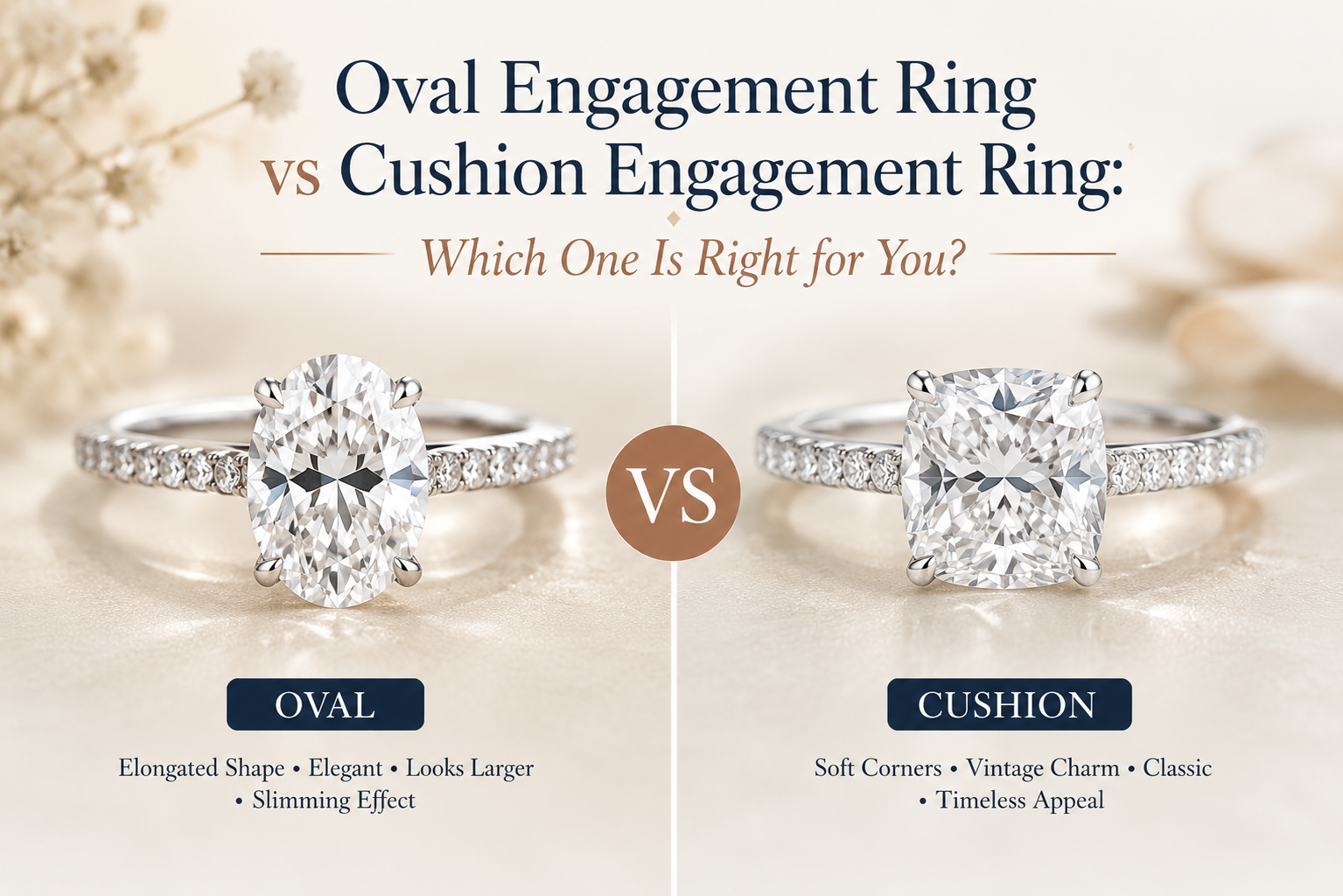
Oval Engagement Ring vs Cushion Engagement Ring: Choosing an engagement ring is not a small decision. You are not just picking jewelry — you are picking something your partner will wear every single day, probably for the rest of their life. And when you are stuck between an oval engagement ring and a cushion engagement ring, the decision gets genuinely harder because both are beautiful in completely different ways.
So instead of telling you one is better, let me actually break down what makes each cut worth considering.
The Oval Engagement Ring: Long, Elegant, and a Little Dramatic
The oval-cut engagement ring has had a serious moment over the last few years. Celebrities wore them, Pinterest boards exploded with them, and suddenly every jeweler had a waitlist.
Here is why people love it: the elongated shape makes fingers look longer and slimmer. If that matters to you or your partner, an oval diamond engagement ring does that better than almost any other cut. The shape also covers more surface area than a round diamond of the same carat weight, so it looks bigger without the higher price tag.
A silver oval engagement ring is a popular budget-friendly starting point — you get the elegant shape with the clean, modern look of sterling silver or white gold. If you want something understated but refined, that combination works really well.
An oval solitaire engagement ring is the most classic way to wear this cut. One stone, a simple band, nothing to distract from the shape itself. Clean and timeless.
On the other end, an oval halo engagement ring wraps small accent diamonds around the center stone, making it look even larger and more brilliant. It is the more glamorous option — not subtle, but genuinely stunning if your partner likes a ring that makes a statement.
The oval promise ring is also worth mentioning here. Smaller oval stones on a delicate band make for a meaningful promise ring that does not look cheap or underwhelming.
As an oval bridal ring or oval wedding ring, the shape works seamlessly with most band styles — straight bands, curved bands, pavé bands. One thing to watch: oval cuts can show a "bow-tie effect," which is a dark shadow across the center of the stone. Ask your jeweler to show you the stone in different lighting before you buy.
If diamonds are not your thing (or not in your budget), an oval gemstone engagement ring with a sapphire, emerald, or morganite center stone is a stunning alternative. These look especially vivid in oval cuts because the elongated shape lets the color really breathe.

The Cushion Engagement Ring: Soft, Romantic, and Full of History
The cushion engagement ring has a completely different personality. Where oval is sleek and modern, the cushion is soft and vintage. The rounded corners and pillow-like shape have a warmth to them that feels less sharp-edged — in the best possible way.
A cushion cut engagement ring was actually one of the most popular diamond cuts for well over a century before round brilliants took over. That history shows in the aesthetic. It does not try to be minimalist or contemporary. It has character.
A cushion diamond engagement ring tends to hold color and fire really well. If you tilt a cushion cut in the light, you get big flashes of color rather than the precise sparkle of a round brilliant. Some people find that mesmerizing. Others prefer the sharper sparkle. It is genuinely a matter of taste.
A silver cushion engagement ring works well for someone who wants the vintage feel without a high price point. Pair it with a simple silver or white gold band, and you get something quiet and lovely.
The cushion solitaire ring is the stripped-back version — just the stone, just the band. It lets the cut speak for itself, and with cushion cuts, that is usually more than enough.
A cushion halo engagement ring adds that ring of smaller diamonds around the center stone. Given the cushion cut's already generous surface area, a halo version can look genuinely opulent. This is a ring that gets noticed.
For couples not ready for an engagement, a cushion promise ring carries the same romantic energy in a smaller, lighter package. Cushion cuts look intentional even in small sizes, which matters when you are not spending thousands.
As a cushion bridal ring or cushion wedding ring, the rounded shape pairs beautifully with curved bands or vintage-inspired settings. Cathedral settings, especially, look exceptional with cushion cuts.
A cushion gemstone ring is worth serious consideration if you like color. Rubies, sapphires, and alexandrites cut in the cushion shape are absolutely striking. The cut was originally developed before modern diamond cutting existed, so it has always worked beautifully with colored stones.

So Which One Should You Actually Choose?
Honestly? It depends on your partner more than anything else.
If they lean toward clean lines, prefer a modern aesthetic, and care about their ring making their hand look elegant and elongated, the oval engagement ring is probably the right call. It photographs beautifully, it is versatile with band styles, and it tends to get compliments from people who would not normally notice jewelry.
If your partner gravitates toward things with a bit of history, prefers something soft and romantic rather than crisp and geometric, and loves the idea of a ring that feels like an heirloom, the cushion engagement ring will suit them better. It has a warmth that oval cuts simply do not have.
A few practical things to consider:
Budget: Both cuts are available at similar price points, but the same carat weight will often look slightly larger in an oval due to its surface area. Cushion cuts tend to have more depth, which means some of the carat weight is hidden below the setting.
Lifestyle: Oval cuts have no corners, so they are quite durable for everyday wear. Cushion cuts have rounded corners, so they are also pretty forgiving — neither is particularly fragile compared to, say, a marquise or a pear.
Setting style: Both cuts are flexible, but cushion cuts tend to lean more vintage, while oval cuts can go either classic or contemporary depending on the setting.
FAQs About Oval Engagement Ring vs Cushion Engagement Ring
1. Do oval engagement rings look bigger than cushion rings of the same carat weight?
Generally, yes. Oval cuts spread out more on the surface, so a one-carat oval will often appear larger than a one-carat cushion. Cushion cuts tend to have more depth, which means some weight sits below the setting and is not as visible. This makes ovals a smart choice if you want maximum visual impact for your budget.
2. Which cut holds its sparkle better — oval or cushion?
It depends on what kind of sparkle you prefer. Oval diamonds deliver a bright, consistent brilliance similar to round cuts. Cushion cuts produce broader, slower flashes of light and fire — more dramatic, but less uniform. Neither is objectively better; it is about personal preference.
3. Are cushion-cut engagement rings considered vintage or modern?
Both, actually. The cushion cut itself is one of the oldest diamond cuts, which gives it an antique feel in traditional settings. But contemporary jewelers have updated it with modern proportions and settings, so it works in both vintage-inspired and current styles. It is a more versatile cut than people often assume.
4. Which setting works best for an oval halo engagement ring?
A thin, pavé halo tends to look the most elegant on an oval center stone because it follows the elongated shape without overwhelming it. A bezel halo is also popular for a sleeker look. If you want maximum sparkle, a double halo works — but it can make the ring look busy, so it comes down to your partner's style.
5. Can I use a colored gemstone instead of a diamond in both cuts?
Absolutely. Both oval and cushion cuts work beautifully with colored gemstones. Sapphires, rubies, emeralds, and morganites are all popular choices. Cushion cuts tend to display color particularly well because of how they retain saturation. Oval cuts make elongated stones look vibrant and vivid. Either way, a colored gemstone center stone is a meaningful and visually striking alternative to a diamond.

Written by Shikhar Jain