The 4 Cs of Diamonds: Complete Guide to Cut, Color, Clarity & Carat
Buying a diamond is an exciting investment, whether you’re shopping for an engagement ring, pendant, earrings, or a timeless gift. However, understanding diamond quality can feel overwhelming if you are unfamiliar with industry grading standards. That’s where the 4 Cs of diamonds come in. These four essential factors—Cut, Color, Clarity, and Carat—determine a diamond’s beauty, value, and overall quality.
This diamond buying guide will help you understand each factor clearly, making it easier to choose the perfect stone for your needs.
What Are the 4 Cs of Diamonds?
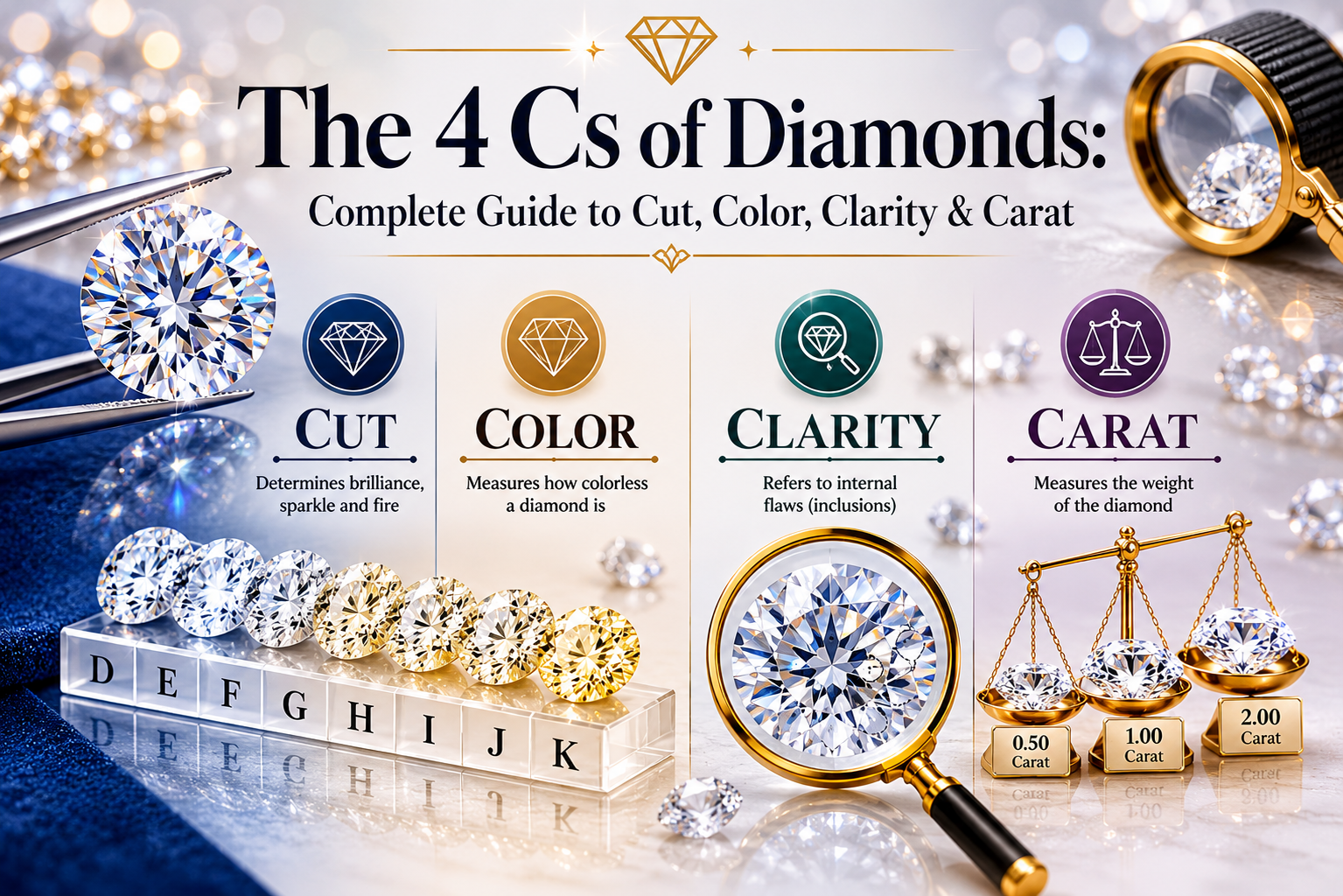
The 4 Cs of diamonds are the internationally recognized standards used to evaluate diamond quality. Introduced by the Gemological Institute of America (GIA), these factors provide a universal way to compare diamonds.
The four components include:
-
Cut – How well the diamond reflects light
-
Color – The presence or absence of color
-
Clarity – Internal or external imperfections
-
Carat – The weight of the diamond
Together, these factors create a complete diamond quality guide for buyers.
Why the 4 Cs Matter When Buying a Diamond
Understanding the diamond cut, clarity, color, and carat grading system helps buyers make informed decisions. A diamond may appear stunning in photos, but its actual quality depends on proper grading.
Benefits of knowing the 4 Cs of diamonds:
-
Helps compare stones accurately
-
Improves your confidence while shopping
-
Prevents overpaying for poor-quality diamonds
-
Makes how to choose a diamond much easier
-
Helps balance beauty with budget
Whether you are buying a natural or lab-grown diamond quality guide certified stone, the same principles apply.
Diamond Cut: The Most Important Quality Factor
Among all the best diamond quality factors, cut is considered the most important because it directly affects sparkle and brilliance.
What Is Diamond Cut?
Cut refers to how well a diamond’s facets interact with light. A properly cut diamond reflects light beautifully, creating brilliance, fire, and sparkle.
A poorly cut diamond may appear dull, even if it has excellent clarity or color.
This is why diamond cut quality is explained as the first consideration in a diamond buying guide.
Diamond Cut Grades
According to GIA diamond grading, cut quality is generally classified as:
-
Excellent
-
Very Good
-
Good
-
Fair
-
Poor
Excellent Cut
Maximum brilliance and sparkle.
Very Good Cut
Strong light performance with slightly lower pricing.
Good Cut
Balanced appearance and affordability.
Fair/Poor Cut
Reduced sparkle and weaker visual appeal.
If sparkle matters most, prioritize cut over other characteristics.

Diamond Color: Understanding the Grading Scale
Color grading measures how colorless a diamond appears.
Diamond Color Grading Scale
The standard diamond color grading scale ranges from:
D to Z
-
D-F → Colorless
-
G-J → Near Colorless
-
K-M → Faint Color
-
N-R → Very Light Color
-
S-Z → Noticeable Color
The less color a diamond has, the rarer and more valuable it becomes.

Which Diamond Color Is Best?
For most buyers:
-
D-F: Premium luxury
-
G-H: Best balance of beauty and price
-
I-J: Budget-friendly but still attractive
For white gold or platinum jewelry, near-colorless diamonds often look exceptional.
This section is essential in any certified diamond guide.
Diamond Clarity: Understanding Imperfections
Clarity refers to internal inclusions and external blemishes.
Since most diamonds form naturally over billions of years, small imperfections are common.

Diamond Clarity Chart
The standard diamond clarity chart includes:
-
FL (Flawless)
-
IF (Internally Flawless)
-
VVS1 / VVS2 (Very Very Slightly Included)
-
VS1 / VS2 (Very Slightly Included)
-
SI1 / SI2 (Slightly Included)
-
I1 / I2 / I3 (Included)
Which Clarity Grade Should You Choose?
Most buyers do not need flawless clarity.
Recommended options:
-
VS1 / VS2 → Excellent balance
-
SI1 → Good value if eye-clean
-
VVS grades → Premium luxury
A strong diamond certification guide helps verify clarity accuracy.
Diamond Carat: Understanding Weight vs Size
Carat refers to weight, not physical dimensions.
Carat Weight Diamond Guide
1 carat = 200 milligrams
Examples:
-
0.25 carat = delicate size
-
0.50 carat = classic everyday option
-
1.00 carat = popular engagement size
-
2.00+ carat = luxury statement

A carat weight diamond guide helps buyers understand that a larger carat weight does not automatically mean better quality.
Diamond Price Factors Related to Carat
Carat strongly impacts pricing because larger diamonds are rarer.
Other diamond price factors include:
-
Cut quality
-
Color grade
-
Clarity grade
-
Certification
-
Shape
-
Market demand
A well-cut 0.90 carat diamond may look more beautiful than a poorly cut 1.20 carat stone.
Diamond Certification: Why It Matters
Certification protects buyers by verifying quality claims.
Diamond Certification Guide
A trusted certificate should include:
-
Carat weight
-
Cut grade
-
Color grade
-
Clarity grade
-
Measurements
-
Polish
-
Symmetry
-
Fluorescence
Top certification labs:
-
GIA diamond grading
-
IGI
-
AGS
A certified diamond guide ensures you purchase confidently.
Natural vs Lab-Grown Diamonds
Many buyers compare mined and lab-created diamonds.
Lab Grown Diamond Quality Guide
Lab-grown diamonds are chemically and visually similar to natural diamonds.
Advantages:
-
Lower price
-
Ethical sourcing
-
High clarity
-
Strong sustainability appeal
Natural Diamond Buying Tips
Natural diamonds offer rarity and traditional prestige.
Tips:
-
Always request certification
-
Compare cut before carat
-
Verify clarity under magnification
-
Check fluorescence
Both types are graded using the 4 Cs of diamonds.
Loose Diamond Buying Guide
Buying loose diamonds gives greater flexibility.
Why Buy Loose Diamonds?
Benefits:
-
Better price comparison
-
More setting customization
-
Transparent grading review
-
Easier certification verification
A smart loose diamond buying guide recommends checking:
-
Certificate authenticity
-
Measurements
-
Proportions
-
Return policy
-
Seller reputation
How to Choose a Diamond Based on Budget
Many buyers ask how to choose a diamond without overspending.
Here’s a practical strategy:
Premium Budget
Choose:
-
Excellent Cut
-
D-F Color
-
VVS Clarity
-
1+ Carat
Balanced Budget
Choose:
-
Very Good Cut
-
G-H Color
-
VS Clarity
-
0.75–1 Carat
Value Budget
Choose:
-
Good/Very Good Cut
-
H-J Color
-
SI1 Clarity
-
Smaller carat
This approach follows the smartest diamond buying guide strategy.
Common Diamond Buying Mistakes to Avoid
Avoid these mistakes:
Focusing Only on Carat
Big doesn’t always mean beautiful.
Ignoring Cut Quality
Sparkle depends heavily on cut.
Buying Without Certification
Always follow a trusted diamond certification guide.
Overpaying for Invisible Clarity
Flawless diamonds often cost more than necessary.
Not Comparing Multiple Stones
Comparison improves value.
Quick Diamond Grading Chart Summary
|
Factor |
Best Choice |
Budget-Friendly Option |
|
Cut |
Excellent |
Very Good |
|
Color |
D-F |
G-J |
|
Clarity |
VVS/VS |
SI1 |
|
Carat |
Based on preference |
Smaller well-cut stone |
This simplified diamond grading chart helps buyers compare quickly.
Final Thoughts
Understanding the 4 Cs of diamonds is essential for making a confident jewelry purchase. By learning about cut, color, clarity, and carat, you can choose a diamond that matches your style, expectations, and budget.
Whether you’re shopping using a diamond quality guide, comparing diamond price factors, reviewing a diamond clarity chart, or exploring a lab-grown diamond quality guide, knowledge is your best investment.
A well-chosen certified diamond offers timeless beauty, long-term value, and lasting emotional significance.
You do not have enough Humanizer words left. Upgrade your Surfer plan.

Written by Shikhar Jain