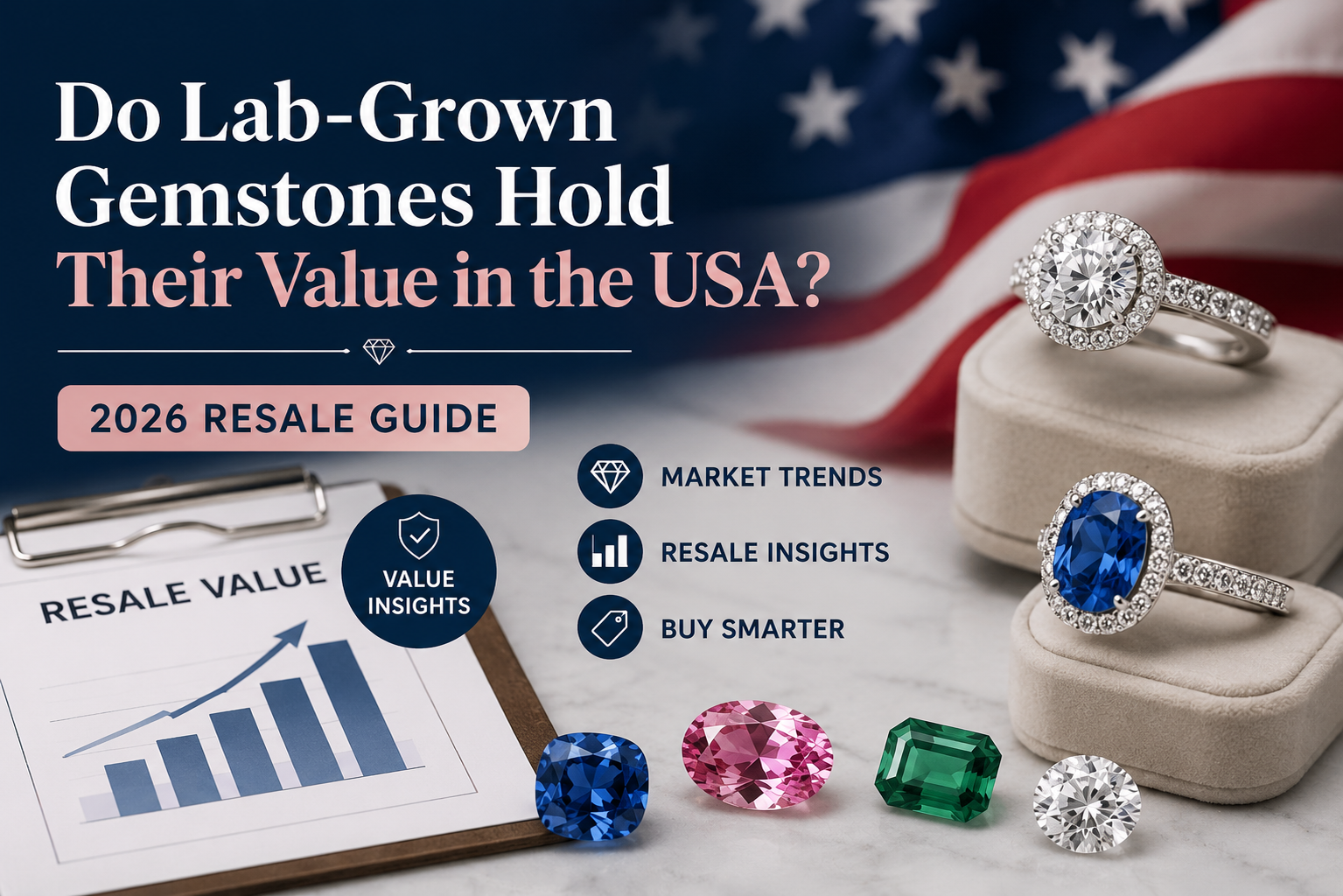
Do Lab-Grown Gemstones Hold Their Value in the USA? 2026 Resale Guide
Introduction
Lab-grown gemstones have rapidly become one of the most talked-about trends in the American jewelry market. From engagement rings to fashion jewelry, buyers are increasingly choosing lab-created stones because they offer impressive beauty at a significantly lower price than natural gemstones. But one important question continues to come up among buyers and investors: Do lab-grown gemstones hold their value in the USA?
If you're considering purchasing a lab-created sapphire, emerald, ruby, or diamond, understanding the resale value in the USA is essential before spending your money.
In this 2026 resale guide, we’ll break down how the U.S. resale market works, compare lab-grown vs natural gemstones' value, explore pricing trends, and help you decide whether lab-created gemstones are worth buying from a long-term perspective.
What Are Lab-Grown Gemstones?
Lab-grown gemstones, also called lab-created gemstones or synthetic gemstones, are stones created in controlled laboratory environments that replicate the physical, chemical, and optical properties of natural gemstones.
Popular examples include:
-
Lab-grown sapphire
-
Lab-grown ruby
-
Lab-grown emerald
-
Lab-grown diamond
Unlike imitation stones like cubic zirconia, genuine lab-created gemstones have similar crystal structures to mined stones.
This makes them visually attractive—but resale value works differently.
Do Lab-Grown Gemstones Hold Their Value?
Short answer: Usually not as well as natural gemstones.
If you're asking, do lab-grown gemstones hold value? The realistic answer is that most lab-created gemstones lose value faster than natural equivalents.
Why? Resale value depends on scarcity, demand, brand recognition, and emotional buyer perception.
Lab-grown stones are:
-
Easier to produce
-
More widely available
-
Less rare
-
Less attractive to collectors
-
Often treated as consumer luxury rather than investment assets
This means lab-created gemstones' resale value tends to be lower.
Why Natural Gemstones Hold More Value
Natural gemstones gain value because of rarity.
A natural emerald formed over millions of years underground carries:
-
Geological rarity
-
Limited supply
-
Historical prestige
-
Collector demand
A lab-grown emerald can be produced in weeks.
That difference directly affects natural vs lab-grown gemstone resale performance.
Example:
A mined 2-carat sapphire may resell for 50–70% of retail value, depending on quality.
A comparable lab-grown sapphire may resell for only 15–35%.
Lab-Grown vs Natural Gemstones Value Comparison
|
Factor |
Lab-Grown Gemstones |
Natural Gemstones |
|
Initial Purchase Cost |
Lower |
Higher |
|
Rarity |
Low |
High |
|
Collector Demand |
Low |
Strong |
|
Emotional Luxury Appeal |
Moderate |
High |
|
Investment Potential |
Weak |
Better |
|
Resale Value Retention |
Lower |
Higher |
|
Supply Stability |
High |
Limited |
This is why many buyers researching lab-grown vs natural gemstones value choose lab stones for affordability rather than investment.
USA Jewelry Market Trends in 2026
The American jewelry market has shifted dramatically.
Consumer trends show:
1. Younger Buyers Prefer Affordability
Millennials and Gen Z often choose lab-grown stones because:
-
Lower upfront cost
-
Ethical sourcing appeal
-
Bigger stone sizes for the budget
-
Modern buying preferences
2. Resale Buyers Still Prefer Natural Stones
Second-hand jewelry buyers in the USA usually prioritize:
-
Natural gemstones
-
Designer brands
-
Certified pieces
-
Rare vintage items
This weakens the lab-created jewelry resale market.
3. Oversupply Impacts Pricing
As manufacturing grows, prices continue dropping.
That reduces the resale value of synthetic gemstones further.
Lab-Grown Gemstone Price Comparison
Here’s a typical 2026 USA pricing comparison:
|
Gemstone Type |
Natural Retail Price |
Lab-Grown Retail Price |
Estimated Resale |
|
Sapphire 1 Ct |
$900–$3,500 |
$150–$600 |
$50–$200 |
|
Ruby 1 Ct |
$1,200–$5,000 |
$200–$700 |
$60–$250 |
|
Emerald 1 Ct |
$1,500–$7,000 |
$250–$900 |
$75–$300 |
|
Diamond 1 Ct |
$4,000–$10,000+ |
$800–$2,500 |
Variable |
This lab-grown gemstone price comparison shows why resale expectations should remain realistic.
Factors That Affect Lab-Grown Gemstones Resale Value in the USA
Not every lab-created gemstone performs equally.
1. Stone Type
Some stones retain value better:
Better resale:
-
Lab-grown diamonds
-
Premium sapphires
-
High-quality rubies
Weaker resale:
-
Synthetic emeralds
-
Lower-end fashion stones
2. Jewelry Setting
Loose stones often resell poorly.
Finished jewelry may retain slightly better value.
Examples:
Better:
-
Designer pendants
-
Branded earrings
Worse:
-
Generic loose stones
3. Brand Recognition
A Tiffany-inspired ring from a recognized jeweler performs better than unbranded pieces.
Brand trust influences resale pricing.
4. Certification
Certified stones feel safer to buyers.
Important labs:
-
GIA
-
IGI
-
GCAL
Certification improves buyer confidence.
5. Condition
Scratches, chips, damaged settings, and missing paperwork all reduce resale value.
Are Lab-Grown Gemstones Worth Buying?
If your goal is affordability? Yes.
If your goal is investment? Usually no.
People asking if lab-grown gemstones are worth buying should define their purpose.
Good reasons to buy:
-
Affordable luxury
-
Ethical concerns
-
Fashion jewelry
-
Large appearance for a lower budget
-
Travel jewelry
-
Modern gifting
Poor reasons:
-
Wealth preservation
-
Speculative investment
-
Collector appreciation

Lab-Grown Gemstone Investment Reality
Many people search for lab-grown gemstone investments expecting appreciation.
That expectation is risky.
Why? Because production technology improves yearly.
As manufacturing becomes cheaper:
-
Retail prices fall
-
Supply increases
-
Scarcity disappears
-
Resale pricing weakens
Unlike rare natural stones, lab-created gemstones behave more like consumer products than collectibles.
Best Lab-Grown Stones for Resale
If resale matters, these perform relatively better:
1. Lab-Grown Diamond
Best among synthetic categories because:
-
Strong consumer awareness
-
Higher demand
-
Better marketplace acceptance
Still, depreciation exists.
2. Lab-Grown Sapphire
Good durability + moderate demand.
Blue sapphires remain recognizable.
3. Lab-Grown Ruby
Luxury appeal helps, but resale remains modest.
Worst Lab-Grown Stones for Resale
Typically weaker:
-
Synthetic emeralds
-
Fashion-grade colored stones
-
Generic mass-produced jewelry
These often have minimal secondary market demand.
Where Can You Sell Lab-Grown Gemstones in the USA?
If you want to resell, realistic options include:
Online Marketplaces
-
eBay
-
Etsy
-
Facebook Marketplace
Pros:
-
Larger audience
Cons:
-
Lower trust
-
Price negotiation pressure
Jewelry Resellers
Some buyers accept lab-created jewelry.
Expect wholesale offers.
Pawn Shops
Fast, but with the lowest payouts.
Usually not ideal.
Consignment Stores
Better for branded pieces.
Slower sales cycle.
Specialty Jewelry Forums
Niche communities may offer stronger pricing.
Buyer vs Reseller Perspective
Buyer Mindset
A buyer thinks:
“I want a beautiful gemstone at a lower cost.”
Lab-grown wins here.
Reseller Mindset
A reseller thinks:
“Can I recover meaningful value later?”
Natural stones win here.
Common Myths About Lab-Grown Gemstones
Myth 1: Lab-Grown Means Fake
False. Lab-created gemstones are chemically real.
Myth 2: Resale Value Will Improve Later
Unlikely unless market conditions change dramatically.
Myth 3: Bigger Stone Means Better Investment
Size alone doesn’t create resale demand.
Myth 4: Ethical Appeal Increases Resale
Ethics influence buying decisions more than resale pricing.
Should Jewelers Stock Lab-Grown Stones?
For retail sales?
Yes.For investment inventory? Depends.Retailers benefit because:
-
Better margins in some categories
-
Faster consumer adoption
-
Broader audience appeal
But inventory depreciation risk exists.
Expert Buying Tips
Before buying:
Ask Yourself:
-
Is this an emotional purchase or investment?
-
Do I care about resale?
-
Is certification included?
-
Is the seller reputable?
-
Am I comparing natural alternatives?
Quick Decision Guide
Buy lab-grown if you want:
✅ Affordable beauty
✅ Ethical sourcing appeal
✅ Large appearance
✅ Fashion jewelry
✅ Modern engagement options
Choose natural if you want:
✅ Better resale potential
✅ Scarcity value
✅ Long-term collectability
✅ Luxury prestige
Realistic Resale Scenario
Example:
You buy a lab-grown ruby ring for $1,200.
After 2 years:
Possible resale:
$250–$500 depending on:
-
condition
-
brand
-
certification
-
platform
-
buyer demand
A comparable natural ruby piece may retain significantly more.
A responsible buying decision means understanding:
-
Gemstones are not all investments
-
Resale depends on market behavior
-
Synthetic production affects scarcity
-
Emotional purchases differ from financial assets
Smart consumers buy lab-grown stones for enjoyment—not speculation.
FAQs
Do lab-grown gemstones hold value?
Yes, but generally much less than natural gemstones.
What is the resale value of lab-grown gemstones in the USA?
Most lab-grown gemstones resell at a fraction of retail, often 15–40%, depending on quality and demand.
Are lab-created gemstones worth buying?
Yes, if affordability, ethics, and appearance matter more than resale.
Which lab-grown gemstone has the best resale?
Lab-grown diamonds usually perform better than other synthetic stones.
Can pawn shops buy lab-grown gemstones?
Some do, but payouts are usually low.
Is lab-grown gemstone investment a good idea?
Generally, no, unless your goal is product resale rather than appreciation.
Lab-grown vs natural gemstones value—which wins?
Natural gemstones usually retain value better due to scarcity.
Final Verdict
So, do lab-grown gemstones hold their value in the USA?
The honest 2026 answer:
Some value, yes—but not strong investment value.
If your priority is affordability, ethical sourcing, modern design, and larger-looking stones for less money, lab-grown gemstones are an excellent choice.
If your priority is wealth preservation, collectible rarity, or resale strength, natural gemstones remain the stronger option.
The smartest buyers understand one key truth:
Lab-grown gemstones are luxury purchases—not traditional investments. Check the latest collection, Star Joy.

Written by Shikhar Jain