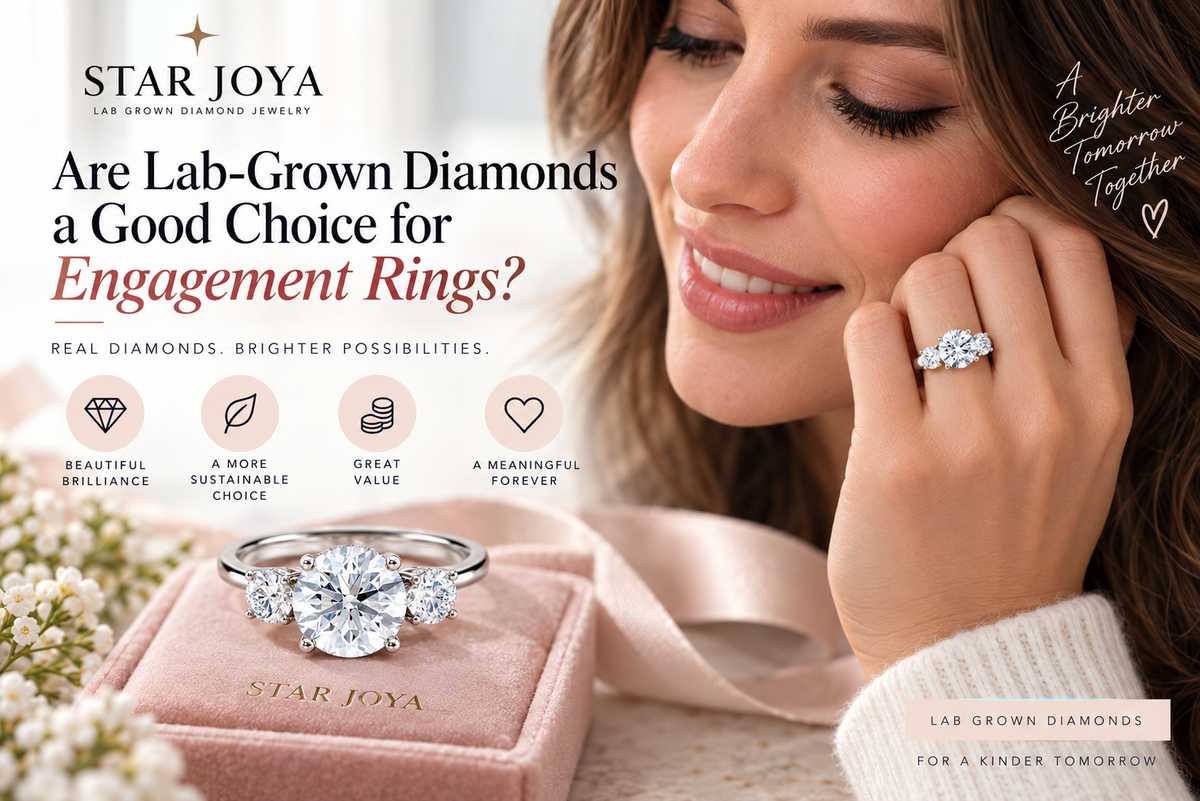
Are Lab-Grown Diamonds a Good Choice for Engagement Rings?
Choosing an engagement ring is a personal decision. Beyond the design, couples often think about how the diamond looks, how strong it is, how much it costs, where it comes from, and how well it holds its value over time. In recent years, lab-grown diamonds have become a more common choice for engagement rings. These diamonds are made using technology, but they have the same basic qualities as diamonds that come from the earth. They look like natural diamonds and are equally durable. Many people find them to be an option because they are often more affordable and can be chosen with clearer ethical and environmental benefits.
But are lab-grown diamonds actually a good choice for an engagement ring? For many couples, they can be. Lab-grown diamonds offer the beauty, hardness, brilliance, and chemical composition associated with diamonds, while often providing more flexibility when it comes to budget and size. However, like any major jewelry purchase, it is important to understand what you are buying before making a decision.
In this guide, we will look at the benefits of lab-grown diamond engagement rings. We will talk about what to think about when choosing one. We will also cover how strong they are and whether they meet quality standards. Pricing is another topic, so we will explain that too. Finally, we will go over styles available for lab-grown diamond engagement rings.
Key Takeaways
-
Lab-grown diamonds are real diamonds, not diamond imitations.
-
They have essentially the same chemical composition and crystal structure as mined diamonds.
-
Lab-grown diamonds are suitable for everyday wear because diamonds are extremely hard.
-
They are available in popular shapes such as Round, Oval, Emerald, Princess, Cushion, Pear, and Marquise.
-
Lab-grown diamonds can offer couples more flexibility in choosing carat size and design within a particular budget.
-
Certification can help you understand a diamond's cut, color, clarity, carat weight, and other characteristics.
-
The choice between lab-grown and mined diamonds depends on your personal priorities, budget, preferences, and views about diamond origin.
-
A good engagement ring should combine a diamond you love with a setting that suits your lifestyle.
What Are Lab-Grown Diamonds?
Lab-grown diamonds are diamonds created using technological processes that reproduce the conditions required for diamond formation. The two principal methods used today are Chemical Vapor Deposition (CVD) and High Pressure High Temperature (HPHT). Although the creation process happens in a controlled laboratory setting, the result is still a diamond. Lab-grown diamonds have the same carbon crystal structure as natural diamonds. They can show the optical qualities that make diamonds sparkle. This makes them fundamentally different from diamond simulants such as cubic zirconia or some types of synthetic gemstones.
When shopping for an engagement ring, it is therefore useful to distinguish between: Lab-grown diamond: A diamond created using technology rather than extracted from the earth. Mined diamond: A naturally formed diamond recovered through mining. Diamond simulant: A different material designed to resemble diamond.
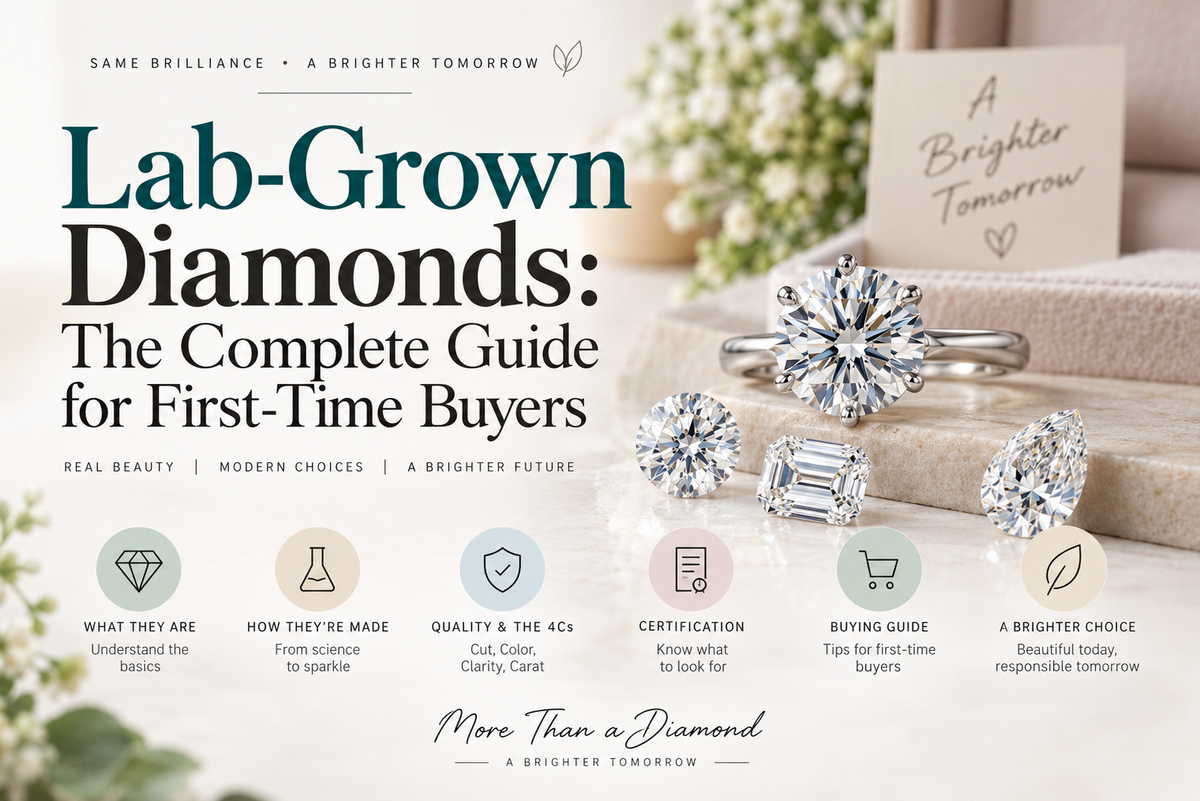
Also Read: Lab Grown Diamonds: The Complete Guide for First-Time Buyers
Are Lab-Grown Diamonds Good for Engagement Rings?
Lab‑grown diamonds can be a choice for an engagement ring. Lab‑grown diamonds are a pick, for couples who care about diamond characteristics, design flexibility, and budget. An engagement ring is usually worn frequently, so durability is important. Diamond ranks 10 on the Mohs hardness scale, making it highly resistant to scratching compared with most jewelry materials. This diamond can be worn every day. I think the ring's strength depends on the metal, setting, prongs, craftsmanship, and how the ring is treated for a diamond ring. A well-made lab-grown diamond engagement ring can be designed for everyday use just like other diamond engagement rings.
Lab-Grown Diamonds vs. Mined Diamonds
One of the most common questions couples ask is how lab-grown diamonds compare with mined diamonds. The biggest difference is origin. I notice that mined diamonds form underground over very long geological periods and are then extracted through mining. I see that lab‑grown diamonds are made in controlled laboratory environments using CVD or HPHT technology.
From a jewelry perspective, consumers generally compare the same characteristics used for other diamonds:
-
Cut
-
Color
-
Clarity
-
Carat weight
-
Shape
-
Certification
-
Setting and craftsmanship
The origin can also influence pricing and purchasing considerations.
Rather than focusing only on whether a diamond is lab-grown or mined, shoppers should examine the individual stone's specifications and certification.
Why Choose a Lab-Grown Diamond Engagement Ring?
1. More Flexibility With Your Budget
One of the reasons that couples think about lab‑grown diamonds is price. Lab‑grown diamonds are often priced differently from mined diamonds. This difference can let buyers think about a carat weight or other specifications while staying within their planned budget. For example, someone interested in a 2-carat lab-grown diamond engagement ring may be able to explore different combinations of cut, color, and clarity rather than limiting the search primarily by carat weight. However, prices vary considerably between individual diamonds and retailers, so it is important to compare actual specifications rather than relying on carat weight alone.
2. They Offer the Classic Diamond Look
A well-cut diamond can produce impressive brilliance and fire regardless of whether its origin is laboratory or geological. The cut quality is particularly important because it influences how effectively a diamond interacts with light. A round brilliant, oval, cushion or emerald cut can look really nice. Stand out based on the style and what someone likes. For couples who want the look of an engagement ring, lab-grown diamonds can offer many different design options.
3. Wide Selection of Diamond Shapes
Lab-grown diamonds are available in many of the same popular shapes used for traditional diamond jewelry.
Some popular choices include:
Round Brilliant
A classic choice known for its symmetrical appearance and strong emphasis on brilliance.
Oval
An elegant elongated shape that can create the visual impression of a larger stone.
Emerald
Known for its long step-cut facets and clean, sophisticated appearance.
Cushion
Combines rounded corners with a softer square or rectangular outline.
Princess
A contemporary square shape with a distinctive geometric appearance.
Pear
A teardrop-shaped design that can look particularly elegant in solitaire settings.
Marquise
Its elongated silhouette can create a dramatic and distinctive engagement-ring style.
Lab-Grown Diamond Ring Styles to Consider
The diamond is only one part of an engagement ring. The setting can significantly change the overall appearance.
Solitaire Engagement Ring
A solitaire features one central diamond and is ideal for people who prefer a clean and timeless design. A lab-grown diamond solitaire ring can be paired with a simple sterling silver, white gold, yellow gold, or platinum setting, depending on the desired style and specifications.
Three-Stone Engagement Ring
Three-stone rings feature a central diamond accompanied by two additional stones. The design can have symbolic significance for some couples, often representing different stages of a relationship.
Halo Engagement Ring
A halo setting surrounds the center diamond with smaller diamonds, creating additional sparkle and visual presence.
Pavé Engagement Ring
Pavé settings incorporate small diamonds along part of the band, adding sparkle while maintaining a relatively refined silhouette.
Does a Lab-Grown Diamond Last a Lifetime?
The diamond itself is very strong. Can last for many years if it is taken care of properly. Still, an engagement ring needs attention. Daily life can expose the ring to bumps, chemicals, grime, and scratches. The prongs and other parts that hold the stone in place should also be checked from time to time.
To care for your lab-grown diamond engagement ring:
-
Remove it during activities that could cause significant impact.
-
Avoid exposing the ring unnecessarily to harsh chemicals.
-
Clean it regularly using an appropriate jewelry-cleaning method.
-
Have the setting and prongs inspected periodically.
-
Store it separately from jewelry that could scratch or damage the setting.
Remember that diamond hardness does not mean the stone is impossible to damage. Strong impacts can potentially cause damage depending on the diamond's characteristics and circumstances.
Should You Buy a Certified Lab-Grown Diamond?
Certification can be an important consideration when purchasing a significant diamond.
A grading report provides information about the diamond's characteristics and helps buyers understand what they are purchasing.
Depending on the laboratory, a report may provide information about:
-
Carat weight
-
Color grade
-
Clarity grade
-
Cut grade
-
Measurements
-
Proportions
-
Diamond shape
-
Growth method or identifying characteristics
When shopping for a higher-value engagement ring, compare the actual grading report and diamond specifications, rather than relying only on marketing descriptions.
Are Lab-Grown Diamonds a Sustainable Choice?
This question requires some nuance. Lab-grown diamonds don't require mining the earth, but making them in a lab still uses energy and other materials. The effect on the environment can therefore vary based on things like the technology used, the type of electricity available, and how the diamonds are made. The way the supply chain works. For consumers who are particularly concerned about sustainability, it is useful to ask jewelry brands about their manufacturing practices and avoid treating broad environmental claims as automatically applying to every lab-grown diamond.
What About the Resale Value of Lab-Grown Diamonds?
Resale value is another factor couples should consider before purchasing an engagement ring. Diamond resale prices can differ substantially from original retail prices, and factors including diamond characteristics, market conditions, brand, certification, and demand influence the resale market. Lab-grown diamonds have also seen changes in prices as the way they are made and how many are available in the market have changed. So an engagement ring should be bought because you like how it looks, what it stands for, how it was made, and the diamond itself, of thinking it will be something you can sell for money later.
How to Choose the Right Lab-Grown Diamond Engagement Ring
Before purchasing, consider these factors:
1. Set Your Budget
Decide what you are comfortable spending before comparing individual diamonds.
2. Choose Your Shape
Round, Oval, Emerald, Cushion, Pear, Princess, and Marquise all create different visual effects.
3. Understand the 4Cs
Learn how cut, color, clarity, and carat influence a diamond's appearance and price.
4. Review Certification
For a significant purchase, review the grading report and verify the diamond's details.
5. Select the Setting
Choose between solitaire, halo, three-stone, pavé, bezel, and other styles.
6. Consider Lifestyle
Someone with an active lifestyle may prefer a secure setting with fewer exposed elements.
7. Compare Complete Rings
Look beyond the center diamond. Compare the metal, craftsmanship, setting quality, side stones, warranty, and after-sales service.
Final Thoughts: Are Lab-Grown Diamonds a Good Choice?
Lab-grown diamonds can be an option for engagement rings for couples who want a real diamond that has a modern background and more choices when it comes to carat size, details, and style. They come in different shapes and types and can be used in traditional single-stone rings, fancy three-stone styles, rings with a circle of diamonds around the center, rings with tiny diamonds all the way around, and new-style engagement rings. The biggest choice isn't just picking between "lab-grown" and "mined." Think about the quality of the diamond, the proof it comes with, the way it is set, how well it is made, how much it costs, where it came from, and what is important to you. An engagement ring is about a relationship and a promise. The best ring is the one where the look and the diamond features match what the couple cares about.
Frequently Asked Questions
1. Are lab-grown diamonds real diamonds?
Yes. Lab-grown diamonds are diamonds produced using technological processes such as CVD or HPHT. They are fundamentally different from diamond simulants because they have the characteristic diamond crystal structure.
2. Are lab-grown diamonds suitable for everyday engagement rings?
Yes. Diamonds are extremely hard and are commonly used for jewelry intended for regular wear. However, the durability of the complete ring also depends on its setting, metal, prongs, craftsmanship, and care.
3. Do lab-grown diamonds sparkle like mined diamonds?
A well-cut lab-grown diamond can display brilliance and fire comparable to a mined diamond with similar optical characteristics. Cut quality plays an important role in how much light the diamond returns.
4. Are lab-grown diamonds cheaper than mined diamonds?
Lab-grown diamonds are often priced lower than comparable mined diamonds, although the difference varies depending on specifications, retailer, market conditions, and other factors.
5. What should I check before buying a lab-grown diamond engagement ring?
Check the 4Cs—cut, color, clarity, and carat weight—along with the diamond's grading report, shape, setting quality, metal, craftsmanship, warranty, and retailer policies. Comparing complete ring specifications rather than price alone can help you make a more informed purchase.

Written by Shikhar Jain