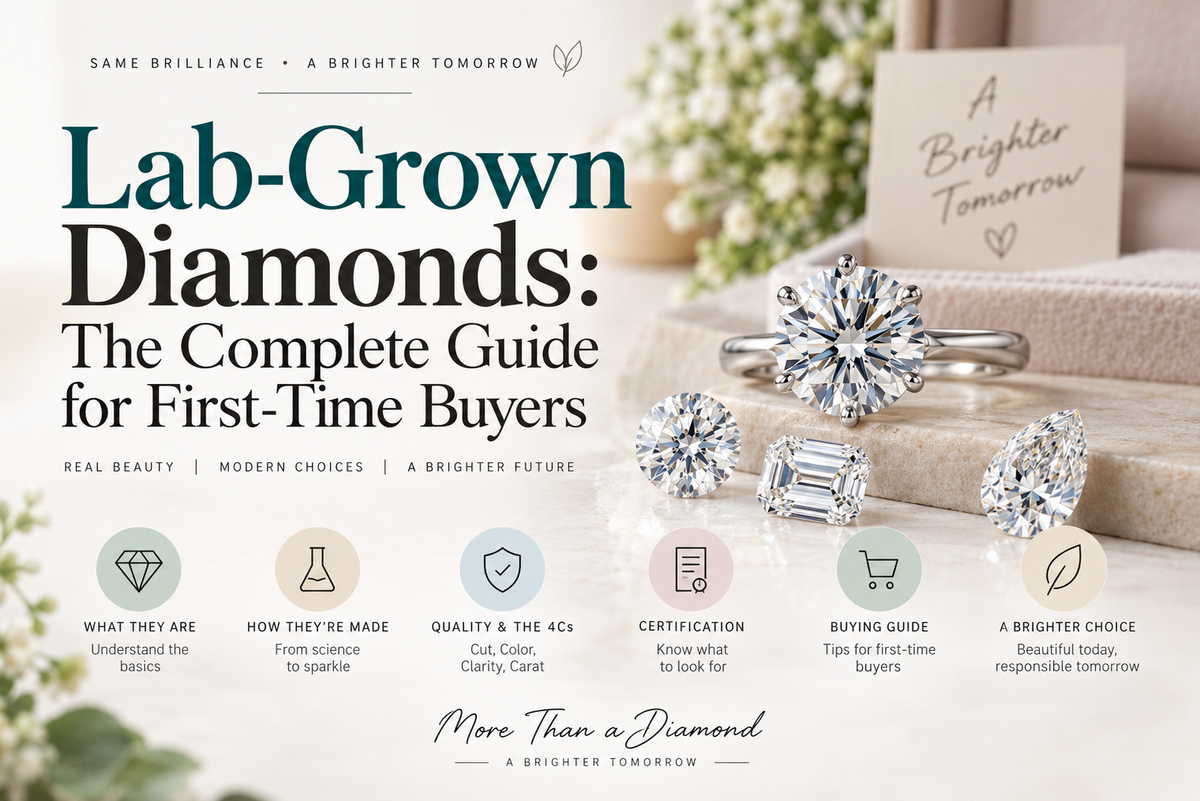
Lab Grown Diamonds: The Complete Guide for First-Time Buyers
Buying a diamond for the first time can feel overwhelming, especially with so many options, shapes, grades, certifications, and price points available today. Lab-grown diamond jewelry has become an increasingly popular option for shoppers looking for the beauty and physical properties of diamond while considering different price and sourcing options.
But what is a lab-grown diamond, how is it created, and what should you look for before buying one? This complete guide explains everything a first-time buyer should know about lab-grown diamond jewelry, including the 4Cs, certification, quality, carat, cut, color, and clarity.
Lab-Grown Diamonds: Key Takeaways
Before buying your first lab-grown diamond, remember these important points:
-
Lab-grown diamonds are diamonds produced using controlled laboratory technology.
-
There are two major production methods: HPHT and CVD.
-
Diamond quality is commonly evaluated using the 4Cs: cut, color, clarity, and carat.
-
Cut can have a major effect on a diamond's brightness and sparkle.
-
Carat measures weight, not simply visual size.
-
Color and clarity should be considered alongside cut and carat.
-
A lab-grown diamond certification provides important information about the stone's characteristics and laboratory-grown origin.
-
Compare the complete jewelry piece—not only the diamond's carat weight.
-
Choose a reputable jeweler with clear product specifications, certification information, and customer policies.
-
For first-time buyers, understanding the 4Cs and certification can make the purchasing process much easier.
What Is a Lab-Grown Diamond?
A lab‑grown diamond is a diamond that is made inside a laboratory, not one that forms inside the Earth over millions of years. A lab‑grown diamond has the chemical composition and crystal structure of a natural diamond, so a lab‑grown diamond is chemically identical to a natural diamond. A lab‑grown diamond is created by technology that recreates the extreme heat and pressure conditions that let diamond crystals grow.
The term lab-grown diamond therefore refers to a diamond created through a technological process in a laboratory rather than extracted through traditional mining. Lab‑grown diamond means a diamond that is made in a laboratory by a process not taken from the earth by mining. Lab‑grown diamonds come in many of the shapes, sizes, colors, and clarity grades as mined diamonds. Lab‑grown diamonds can be worn on engagement rings, earrings, necklaces, pendants, bracelets, and many other lab‑grown diamond jewelry items.
Also Read
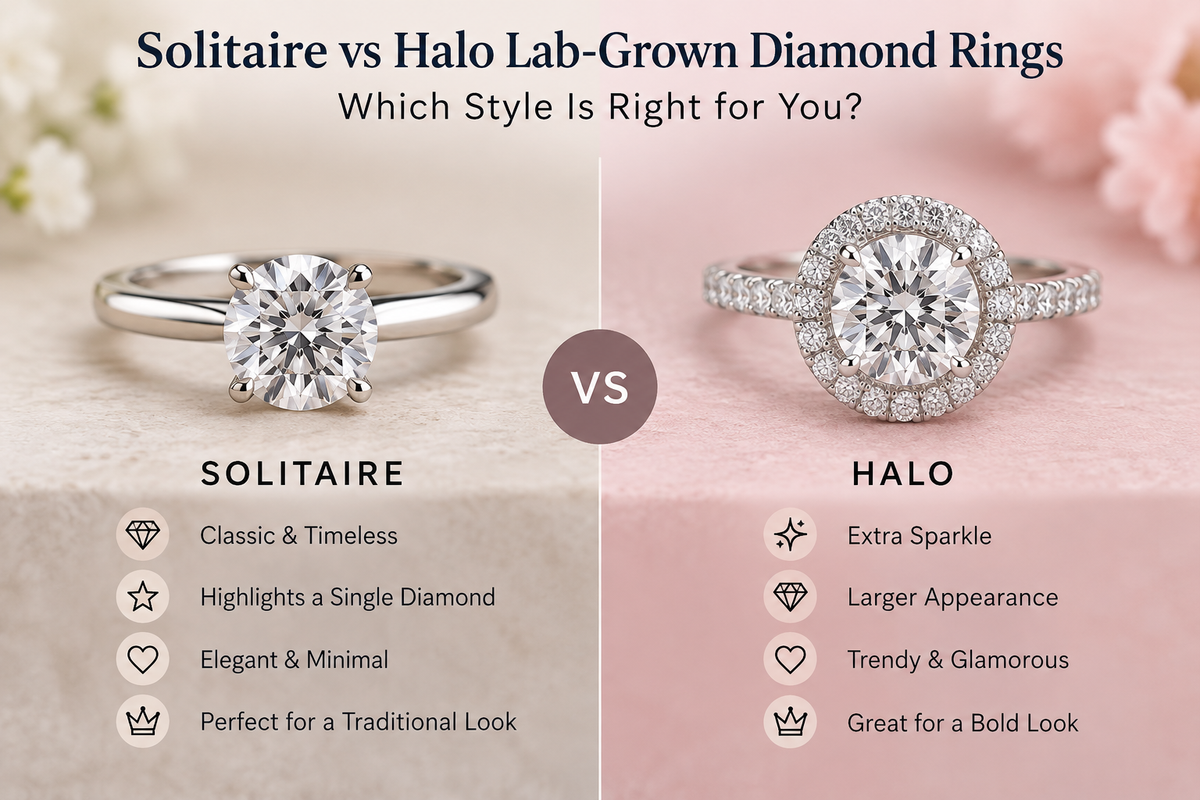
Solitaire vs Halo Lab-Grown Diamond Rings: Which Style Is Right for You?
How Are Lab-Grown Diamonds Made?
Understanding how lab-grown diamonds are made is one of the most common questions from first-time buyers.
There are two primary technologies used to create lab-grown diamonds:
1. HPHT – High Pressure High Temperature
HPHT stands for High Pressure High Temperature. This method recreates high-pressure and high-temperature conditions that are similar to those involved in natural diamond formation. A small diamond seed is placed inside a controlled environment along with a carbon source. Under pressure and high temperature, carbon crystallizes around the seed and gradually forms a diamond crystal.
2. CVD – Chemical Vapor Deposition
CVD stands for Chemical Vapor Deposition. In this method, a small diamond seed is put inside a chamber that holds gases containing carbon. Energy is added to the chamber, which makes the gases break apart. The carbon atoms from the gases then stick to the diamond seed. Slowly form a new layer of diamond. This process builds the diamond one layer at a time. Both HPHT and CVD are known ways to make diamonds in a laboratory.
Are Lab Grown Diamonds Real Diamonds?
Yes. A lab‑grown diamond is a diamond, not a diamond simulant like cubic zirconia. The main difference is where it comes from: natural diamonds form inside the Earth while lab‑grown diamonds are made in a controlled laboratory setting. Still, not every stone made in a laboratory is a diamond. When you buy one, look for a trusted seller and a grading report that clearly says the stone is lab‑grown.
Understanding Lab-Grown Diamond Quality
One of the most important things to understand when shopping for a lab-grown diamond is quality.
Diamond quality is commonly evaluated using the 4Cs:
-
Cut
-
Color
-
Clarity
-
Carat
These four characteristics can significantly affect the appearance and price of a diamond.
Lab Grown Diamond 4Cs
1. Lab Grown Diamond Cut
Lab-grown diamond cut refers to how effectively a diamond has been proportioned, polished, and finished to interact with light.
Cut is particularly important because it influences a diamond's:
-
Brightness
-
Fire
-
Sparkle
-
Light return
-
Overall appearance
A cut diamond looks lively and brilliant. A cut stone may look less bright even if it has a higher carat weight. When buying a diamond engagement ring or other jewelry, do not focus on carat. Pay attention to the cut and overall proportions.
2. Lab Grown Diamond Color
Lab‑grown diamond color tells how much body color the diamond shows. Traditional white diamond color grades usually go from D to Z, with D as the lightest color grade. Diamonds that sit near the end of that scale normally look almost colorless, while diamonds that sit lower can show more yellow or brown. The best diamond color grade depends on the jewelry setting, the metal color, personal taste,e and the budget. For instance,ce a diamond set in metal can make color differences stand out, whereas warmer metal can match diamonds that are a little lower in color grade.
3. Lab Grown Diamond Clarity
Lab‑grown diamond clarity is about how clear a diamond's. Lab‑grown diamond clarity looks at features called inclusions and external features called blemishes. Clarity grades range from diamonds that show no inclusions when examined to stones that have more noticeable characteristics.
Common clarity grades include:
-
FL – Flawless
-
IF – Internally Flawless
-
VVS – Very, Very Slightly Included
-
VS – Very Slightly Included
-
SI – Slightly Included
-
I – Included
For many buyers, a diamond does not necessarily need the highest possible clarity grade to look beautiful. The goal is often to find a stone that appears clean to the eye while balancing clarity with the other 4Cs.
4. Lab Grown Diamond Carat
Lab-grown diamond carat refers to the diamond's weight, not its size alone. One carat equals 200 milligrams or 0.2 grams. Carat weight can affect the price of a diamond. Two diamonds with the same carat weight can have different prices because of differences in cut, color, clarity, shape, certification, and other characteristics. For example, a cut 1-carat diamond can sometimes appear more visually impressive than a poorly proportioned diamond, with the same weight. Therefore, first-time buyers should consider the diamond rather than choosing based solely on carat.
Lab Grown Diamond Certification
Lab-grown diamond certification is another important consideration when purchasing a diamond.
A diamond grading report provides information about characteristics such as:
-
Carat weight
-
Color
-
Clarity
-
Cut or proportions
-
Measurements
-
Shape
-
Laboratory-grown identification
Organizations such as IGI and GIA issue grading reports for laboratory‑grown diamonds, though the report format and grading practices can vary. Before buying a laboratory‑grown diamond, check the certification details. Make sure the information on the grading report matches the laboratory‑grown diamond being offered. For higher‑value laboratory‑grown diamond purchases, buyers should also verify the grading report with the laboratory that issued the grading report, where verification's available.
Lab Grown Diamond Jewelry: What Can You Buy?
Today, lab-grown diamond jewelry is available in many styles.
Lab Grown Diamond Rings
Lab-grown diamond rings come in styles like solitaire, halo, three-stone, cluster, and contemporary designs. These types of rings are especially popular for engagement and anniversary jewelry.
Lab Grown Diamond Earrings
From classic stud earrings to hoop earrings and drop earrings lab‑grown diamonds can be used in jewelry and also in special occasion jewelry, with lab‑grown diamonds.
Lab Grown Diamond Necklaces
Lab‑grown diamond necklaces and pendants can range from solitaire pieces to bold statement styles.
Lab Grown Diamond Bracelets
Tennis bracelets and other diamond bracelet designs can include lab-grown diamonds in a range of carat weights and styles. When buying jewelry, look beyond the diamond. Also pay attention to the metal used, the quality of the setting, the craftsmanship, the gemstone details, and the overall design. These factors all matter as much as the diamond itself.
How to Choose Your First Lab Grown Diamond
If you're buying a lab-grown diamond for the first time, follow these steps:
Step 1: Set Your Budget
Determine how much you are comfortable spending before comparing individual diamonds.
Step 2: Choose Your Jewelry Type
Decide whether you're looking for a ring, earrings, necklace, bracelet, or another piece of jewelry.
Step 3: Select the Shape
Popular diamond shapes include round, oval, emerald, cushion, pear, princess, radiant, and marquise.
Step 4: Understand the 4Cs
Compare cut, color, clarity, and carat rather than focusing on just one characteristic.
Step 5: Check Certification
Look for a reliable grading report and confirm that it identifies the diamond as laboratory-grown.
Step 6: Compare the Complete Package
For finished jewelry, compare the diamond specifications along with the metal, setting, craftsmanship, warranty, return policy, and after-sales service.
Why First-Time Buyers Should Look Beyond Carat
A common mistake is thinking that a larger carat always means a better diamond. That's not true. A diamond's look depends on things. The cut quality matters a lot. So do the proportions and the shape. Color and clarity play a role too. Even the way the diamond is set in the jewelry can change how it appears. All these factors together decide how beautiful the diamond looks in the end.
For example, elongated shapes such as oval or pear diamonds can create a different visual impression from a round diamond of similar weight. Instead of asking only, "How many carats is it?" consider asking:
Does it look bright? Is the cut well balanced? Is the clarity suitable for my needs? Does the color work with my chosen metal? Is it certified? This approach can help first-time buyers make a more informed decision.
Frequently Asked Questions About Lab Grown Diamonds
1. What is a lab-grown diamond?
A lab-grown diamond is a diamond created in a controlled laboratory environment using technologies such as HPHT or CVD. It has the same crystal structure and chemical composition as natural diamonds.
2. How are lab-grown diamonds made?
Lab-grown diamonds are primarily produced using HPHT (High Pressure High Temperature) or CVD (Chemical Vapor Deposition) technology. Both methods use a diamond seed and controlled conditions to grow diamond material.
3. Are lab-grown diamonds real diamonds?
Yes. Lab-grown diamonds are diamonds produced through laboratory technology. They differ from diamond simulants such as cubic zirconia because their composition and crystal structure match diamond.
4. What are the 4Cs of a lab-grown diamond?
The 4Cs are Cut, Color, Clarity, and Carat. These characteristics are used to describe and evaluate important aspects of a diamond's appearance and specifications.
5. Should I buy a certified lab-grown diamond?
For buyers who want documented information about their diamond, a grading report from a recognized gemological laboratory can provide useful details about the stone's characteristics and laboratory-grown origin. Always check that the report corresponds to the diamond you are purchasing.
Final Thoughts
For first-time buyers, understanding lab-grown diamonds doesn't have to be complicated. Start with the basics: learn what a lab-grown diamond is, understand how lab-grown diamonds are made, and become familiar with the lab-grown diamond 4Cs.
From there, compare cut, color, clarity, carat, certification, and the overall jewelry design. Whether you're searching for an engagement ring, earrings, necklace, or another piece of lab-grown diamond jewelry, informed comparison can help you select a piece that matches your style, priorities, and budget.

Written by Shikhar Jain